
Bottled water usually wins the first price comparison.
There is no installation proposal, no equipment decision and no new maintenance contract. The office, hotel or restaurant simply places another order and carries on.
That is exactly why bottled water can remain in a business for years.
The cost arrives in small, familiar invoices. Delivery charges sit with procurement. Storage problems belong to facilities. Meeting-room waste becomes an admin issue. Empty bottles go to housekeeping. No single department sees the full amount.
Point-of-use filtration looks more expensive because its costs are visible at the beginning.
The honest point-of-use water filtration vs bottled water cost comparison therefore cannot stop at the purchase invoice. It needs to compare the complete operating model over time.
At Sprudel, we help UAE businesses assess their current water use and replace repeated bottle dependence with on-site filtered still, chilled, hot or sparkling water systems.
For a site-specific comparison, call +971 4 546 3988, email hello@sprudel.life, or explore Sprudel’s solutions at https://sprudel.awove.dev/.
Start With the Cost Nobody Usually Calculates
Imagine a procurement manager reviewing last month’s bottled-water invoice.
The number looks reasonable.
Now add the time spent placing orders, receiving deliveries and resolving shortfalls. Add the square metres used for boxes of water and five-gallon jugs. Add fridge space, meeting-room restocking, waste handling and emergency purchases before events.
That changes the calculation.
A proper bottled-water cost review should include:
- Water purchases
- Delivery charges
- Storage space
- Staff handling time
- Chilling and refrigeration
- Stock losses
- Half-used meeting-room bottles
- Waste collection
- Supplier administration
- Emergency orders
- Price increases
- Plastic-related reporting and compliance work
Sprudel’s UAE office white paper notes that a 500-person workplace can spend approximately AED 50,000 to AED 100,000 annually on bottled water, depending on consumption and supplier arrangements. It also identifies storage, delivery and waste management as additional indirect costs.
Your business may spend less or more. The useful point is that the supplier invoice rarely represents the whole cost.
What Does Point-of-Use Water Filtration Cost?
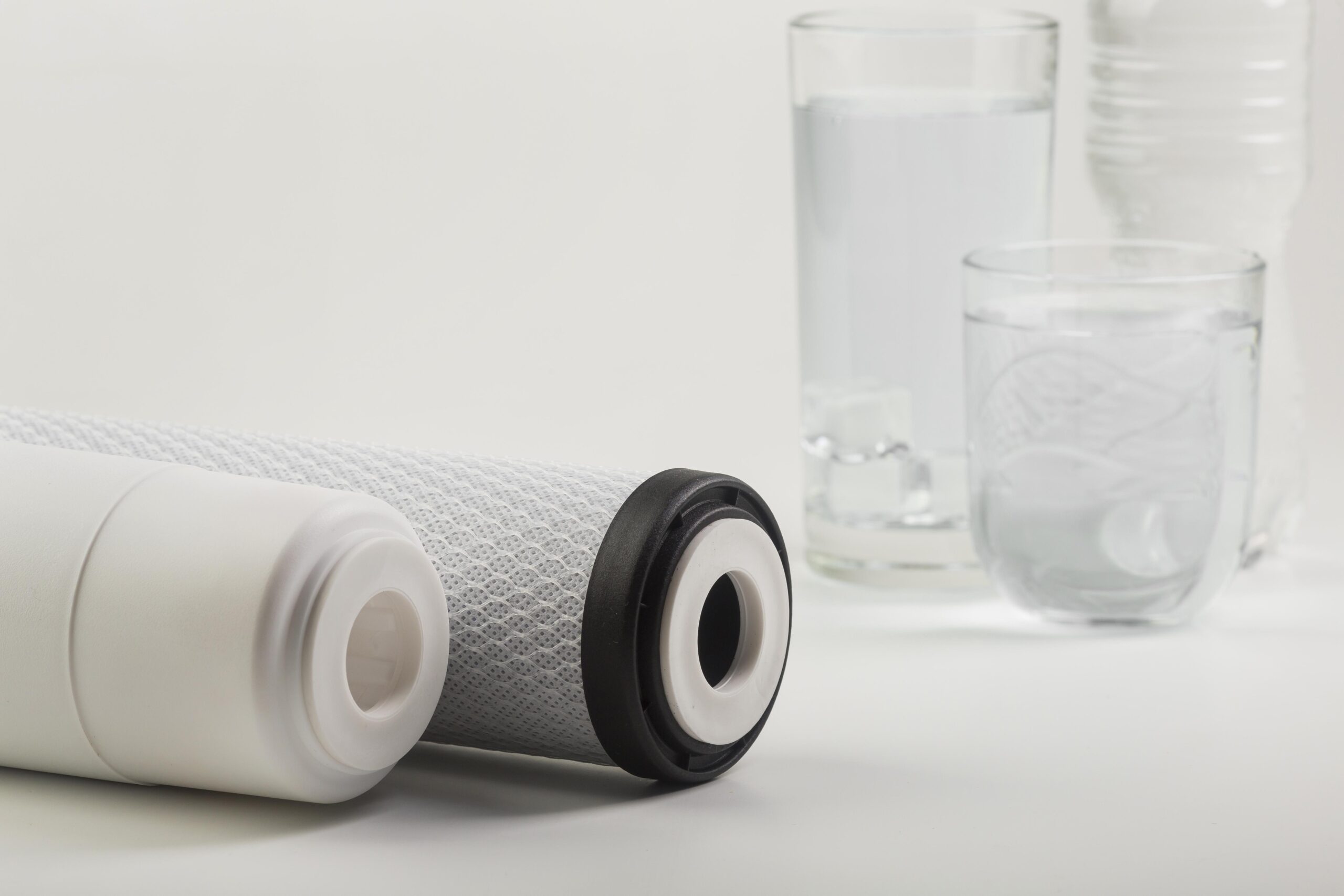
A point-of-use system connects to the mains water supply and filters water where it is dispensed.
Its cost structure is different from bottled water.
Instead of purchasing every litre as a packaged product, the business pays for:
- Equipment
- Installation
- Filtration components
- Filter replacements
- Preventive maintenance
- Electricity
- Carbon dioxide where sparkling water is included
- Cleaning and hygiene care
- Occasional technical support
There may be a larger initial investment, but the ongoing cost is generally linked to maintaining the system rather than repeatedly purchasing, transporting and disposing of bottles.
An illustrative example in Sprudel’s office white paper compares an AED 45,000 system investment with AED 70,000 in previous annual bottled-water spending and AED 4,000 in yearly maintenance. In that scenario, the stated payback period was under one year. Actual results will depend on site size, equipment, consumption and contract terms.
This is why a point-of-use water filtration vs bottled water cost comparison should use your own figures, not a generic promise.
The Four-Line Cost Test
Facility and procurement teams can begin with four calculations.
1. Current annual bottled-water spend
Add every bottle, jug, delivery fee and emergency order from the previous 12 months.
2. Current indirect operating cost
Estimate the time spent ordering, receiving, moving, chilling, restocking and disposing of water packaging.
3. Total filtration cost over the comparison period
Include equipment, installation, maintenance, filters, energy and any consumables.
4. Payback period
Use this simple formula:
Initial filtration investment ÷ annual net saving = estimated payback period
Annual net saving means the current bottled-water cost minus the annual operating cost of the filtration system.
This will not capture every benefit, but it creates a more honest starting point than comparing one monthly invoice with one equipment quote.
Sprudel can help assess your current setup. Send your approximate monthly bottle usage and business type to hello@sprudel.life.
When Point-of-Use Filtration Usually Makes Financial Sense
On-site filtration often becomes more attractive when a business has:
- High daily water consumption
- Frequent deliveries
- Limited storage
- Large meeting-room usage
- Several staff shifts
- Expensive sparkling-water purchases
- Regular events
- Multiple bottled-water suppliers
- Strong plastic-reduction targets
- A long-term lease or stable site
The higher and more predictable the demand, the easier it is to spread the initial investment across a large volume of water.
A small temporary office with restricted plumbing may reach a different conclusion. The cheapest option depends on the operating reality, not the trend.
Do Not Save Money by Buying the Wrong System
A filtration system only creates value when it performs properly.
Mistake 1: Choosing the lowest quotation
The cheapest system may have insufficient capacity, weaker cooling or limited service coverage. Compare the full specification and support agreement.
Mistake 2: Ignoring footfall
Headcount does not equal usage. Visitors, meetings, shifts, gym classes and restaurant service peaks can increase demand quickly.
Mistake 3: Not checking chilled output
In the UAE, employees and guests expect genuinely cold water. An undersized chiller can push people back towards bottled water, leaving the business with two systems instead of one.
Mistake 4: Poor tap placement
A tap hidden in an inconvenient pantry corner will not replace bottles in boardrooms, reception or other high-use areas.
Mistake 5: No maintenance plan
Filter changes, cleaning and preventive servicing must be priced and scheduled before installation.
Mistake 6: Weak after-sales support
If the supplier is slow to respond, facilities teams may order bottled water during downtime. That weakens the savings and employee trust.
To compare capacity, chilled output and service options, call Sprudel on +971 4 546 3988.
Mini Case Scenario: The Office Paying for Water Twice
A Dubai office installed a low-cost filter to reduce bottled-water spending.
The system worked during quiet hours but could not provide enough chilled water after lunch or before large meetings. Employees complained, so administration kept bottled water for guests and busy periods.
The office now paid for filter maintenance and bottled-water deliveries.
The problem was not point-of-use filtration. The system had been selected by price rather than peak demand.
A correctly sized system would have cost more initially but could have replaced the old routine properly.
Which Sprudel Solution Fits the Cost Problem?
Sprudel Work
For offices, corporate pantries, boardrooms and professional spaces. It can provide filtered still, chilled, hot or sparkling water depending on the configuration.
Sprudel Serve
For restaurants, cafés, bars and hotel F&B outlets that want to reduce bottled still and sparkling water procurement while improving service control.
Sprudel Life
For gyms, wellness facilities, campuses and shared environments where people regularly refill reusable bottles.
Sprudel Loop
For hotels and high-volume properties that need on-site filtration and reusable glass bottle circulation.
The right savings model may involve more than one system across a property. A hotel, for example, may use Sprudel Loop for guest rooms, Sprudel Serve for restaurants and Sprudel Work for administration offices.
Explore the complete range at https://sprudel.awove.dev/ or email hello@sprudel.life for a tailored recommendation.
Frequently Asked Questions
Is filtered water cheaper than bottled water for UAE businesses?
It can be, particularly for businesses with high and consistent consumption. The result depends on the system cost, maintenance, current bottle spending and operational savings.
What hidden bottled-water costs should businesses include?
Include delivery administration, storage, staff handling, refrigeration, waste management, emergency orders and half-used bottles.
How long does point-of-use filtration take to pay back?
There is no universal period. Some Sprudel source examples indicate payback within one year, while other commercial scenarios may take longer. The calculation should use the business’s actual consumption and proposal.
Is maintenance expensive?
Maintenance varies by system and usage. It should be quoted clearly, including filter replacements, preventive service and technical support.
How can I request a cost comparison from Sprudel?
Call +971 4 546 3988, email hello@sprudel.life, or visit https://sprudel.awove.dev/ with your current monthly water usage and business type.
Count the System, Not Just the Bottle
Bottled water can look cheaper because the business pays for it gradually.
Point-of-use filtration can look expensive because the investment appears at the beginning.
The more useful comparison asks what each model costs to operate reliably over several years.
For many UAE businesses, on-site filtration can reduce procurement, deliveries, storage, handling and packaging waste while giving teams direct access to filtered water. But the system must be sized properly, maintained consistently and supported locally.
That is the real point-of-use water filtration vs bottled water cost comparison.
To calculate what the change could mean for your workplace, restaurant, hotel, gym or shared facility, visit https://sprudel.awove.dev/, call +971 4 546 3988, or contact hello@sprudel.life.