

Your company wants to reduce plastic water bottles.
Procurement is reviewing suppliers. Facilities is considering a filtered water dispenser. Management wants to know whether the investment will actually make a difference.
But there’s one question nobody has answered.
Will employees actually use the refill system once it’s installed?
It’s easy to approve a sustainability initiative. It’s harder to know whether it works in everyday office life.
A new dispenser might look impressive during installation, but what happens when the pantry gets busy? Does the water stay cold? Do employees bring reusable bottles? Does reception continue ordering plastic bottles for guests?
These are exactly the questions a 30-day refill trial can help answer.
For UAE businesses exploring sustainable water solutions for business UAE, a short, structured evaluation can reveal what works before committing to a wider rollout.
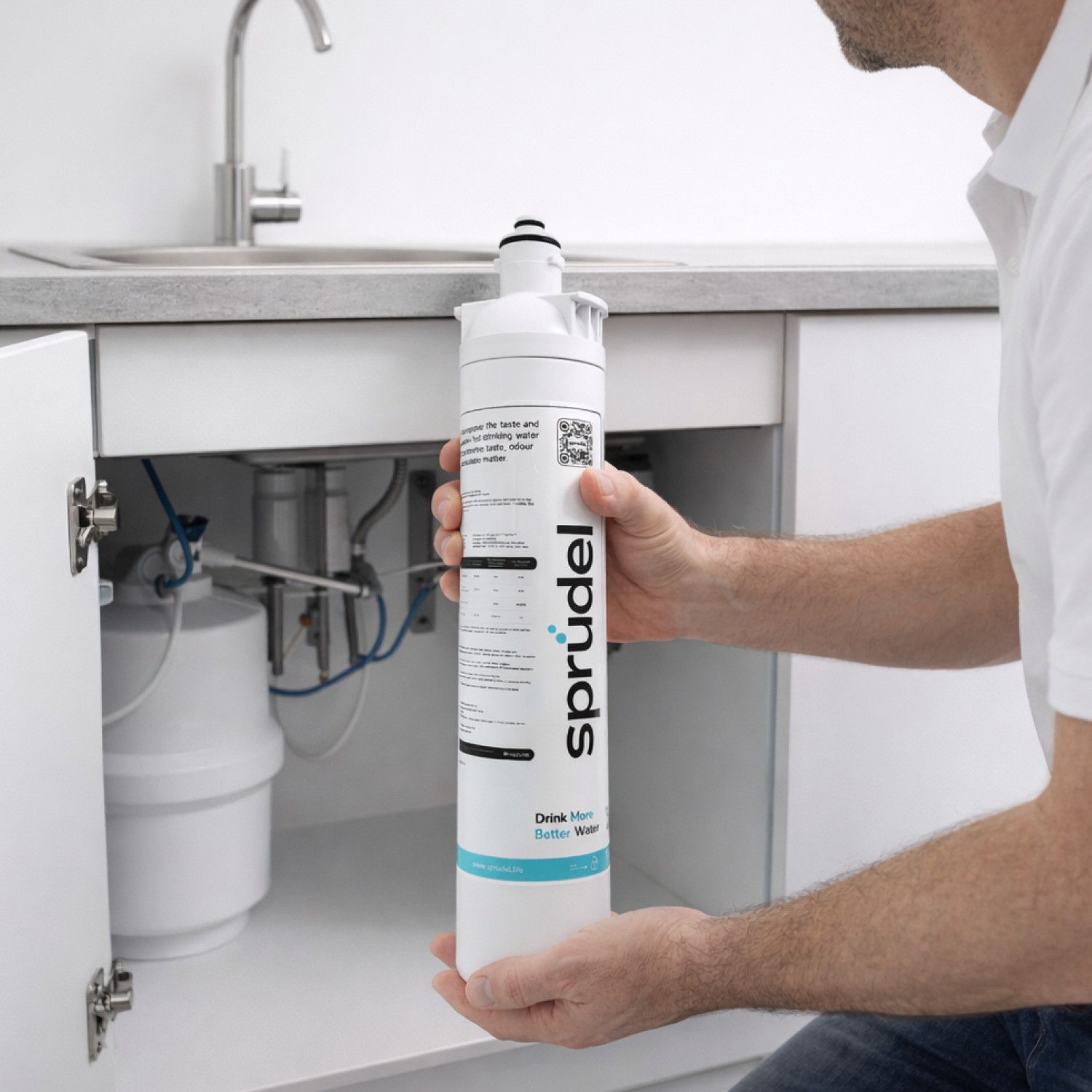
Sprudel helps offices, hotels, restaurants, gyms and commercial spaces explore on-site filtered water systems suited to their daily requirements.
Interested in improving workplace hydration? Visit Sprudel or call +971 4 546 3988 to discuss your options.
Day Zero: Decide What Success Actually Means
Before introducing a refill system, agree on what the business wants to achieve.
Is the priority reducing single-use plastic bottles?
Saving storage space?
Making drinking water more convenient for employees?
Improving client service?
Reducing time spent managing bottled water deliveries?
Different goals require different measurements.
For example, a business focused on plastic reduction should track bottled water consumption before and after introducing refill access.
An office struggling with pantry queues should measure waiting times and dispensing performance.
A company concerned about operating costs should compare water purchases, equipment expenses, servicing and staff handling.
The trial should measure the problem you’re trying to solve, not simply how much water the new dispenser produces.
Week One: Are People Actually Refilling?
The first week is about behaviour.
A dispenser can be installed correctly and still remain underused.
Employees may continue taking bottled water because they’re used to it. Some may not know where the new refill point is located. Others may find it inconvenient to carry reusable bottles.
Observe how people respond.
Are employees using the station without reminders?
Are reusable bottles becoming more common?
Does reception still rely on individually packaged water?
Are people comfortable using the equipment?
A simple daily refill count, where the equipment supports it, can help establish usage patterns.
You can also collect anonymous staff feedback about convenience, water temperature and accessibility.
Avoid treating every refill as one plastic bottle eliminated. Refill volumes and bottle sizes vary, so plastic reduction needs to be measured separately.
For businesses evaluating sustainable water solutions for business UAE, actual adoption is one of the most useful indicators of whether the investment fits the workplace.
Week Two: Test the System When Everyone Is Thirsty
The second week should focus on performance.
Choose the busiest period of the working day.
In a Dubai office, this might be lunchtime or the break between meetings. In a gym, it could be immediately after a group class. In a restaurant, demand may rise during lunch or dinner service.
Watch what happens when several people use the system consecutively.
Does the water remain chilled?
How quickly can people refill?
Are queues forming?
Does the dispensing point create congestion?
Is the location convenient for different users?
These observations help reveal whether the system has been correctly sized.
A low-cost dispenser may seem sufficient during quiet hours but struggle under realistic demand.
This is why businesses should check chilled-water output, recovery time and peak footfall before making purchasing decisions.
If your workplace needs help assessing its requirements, contact hello@sprudel.life to discuss suitable Sprudel configurations.
Week Three: Follow the Bottles That Haven’t Disappeared
By the third week, look beyond the refill station.
Visit the pantry, meeting rooms, reception and storage areas.
Are cases of bottled water still arriving?
Has the fridge stopped filling up with plastic bottles?
Are cleaning teams collecting fewer empty bottles?
Does reception still request separate bottled water for visitors?
The answers reveal whether the new system is replacing the old routine or simply operating alongside it.
For accurate measurement, compare bottles consumed during the trial with a comparable period before installation.
Account for opening stock, new purchases and remaining stock.
Also consider employee attendance and visitor numbers.
A reduction in bottled water orders may reflect existing stock being used rather than a genuine change in consumption.
This distinction matters when businesses report sustainability progress.
Week Four: What Is the System Really Costing?
The final week is about operational value.
Review the expenses associated with the new arrangement.
These may include equipment charges, installation, electricity, water consumption, replacement filters and maintenance.
Compare them with the existing bottled water routine, including purchasing, delivery coordination, storage and staff handling.
Don’t assume a filtered water system is automatically cheaper.
The result depends on consumption, equipment configuration and ongoing costs.
Also check whether facilities has experienced any technical issues.
Were they resolved efficiently?
Is the maintenance schedule clear?
Does the team know who to contact when support is needed?
Weak after-sales support can undermine an otherwise successful transition.
For businesses considering a longer-term solution, Sprudel can help discuss installation requirements and ongoing servicing. Call +971 4 546 3988 for more information.
Your Day 30 Results: Six Numbers Worth Reporting
At the end of the trial, prepare a short report for management.
Include these six measurements:
1. Bottled water consumption: How many single-use bottles were consumed compared with the baseline?
2. Refill usage: How many litres or refill events were recorded, where measurement is available?
3. Staff adoption: What proportion of surveyed employees regularly used the refill point?
4. Peak performance: Did chilled output and dispensing speed meet requirements during busy periods?
5. Operational costs: What were the recorded expenses, and what ongoing costs are expected?
6. Maintenance and support: Were there interruptions, service issues or unresolved concerns?
These measurements provide a stronger basis for decision-making than simply reporting that a new dispenser was installed.
A successful trial should demonstrate practical improvement, not just equipment usage.
What If the Trial Doesn’t Go as Planned?
A disappointing result doesn’t necessarily mean filtered water is the wrong choice.
Perhaps the dispenser was placed too far from employees.
Maybe one water point was expected to serve too many people.
Perhaps chilled output was insufficient, or reception continued using bottled water because the new system wasn’t convenient for meetings.
These are useful findings.
They allow the business to improve placement, reconsider capacity or select a different configuration before expanding.
The biggest mistake would be investing in more equipment without understanding why the first installation underperformed.
How Sprudel Fits Into Your Refill Strategy
Sprudel provides different on-site filtered water solutions for different commercial environments.
Sprudel Work supports offices, staff pantries, meeting rooms, boardrooms and coworking spaces.
Sprudel Serve supports restaurants, cafés, bars and hotel F&B operations requiring filtered still and sparkling water.
Sprudel Life supports gyms, wellness facilities and active shared environments where convenient refilling matters.
For hotels, the Award-Winning Sprudel Closed Loop Bottling System supports on-site filtered water and reusable glass bottle operations.
The right solution depends on how people use water within each environment.
A business may begin by evaluating one office pantry before considering additional water points across other departments or locations.
Explore Sprudel’s commercial water solutions to understand which options may suit your requirements.
Frequently Asked Questions
What is a 30-day water refill trial?
It is a structured evaluation period during which a business measures refill usage, bottled water consumption, user experience, equipment performance and operating requirements. It is not necessarily a supplier-provided free trial.
How can businesses measure plastic bottle reduction?
Compare actual single-use bottle consumption before and after introducing refill access, accounting for stock changes, employee attendance and visitor demand.
What are sustainable water solutions for businesses in the UAE?
They include on-site filtered water dispensers, mains-fed taps, reusable bottle refill points and closed-loop bottling systems designed to reduce reliance on single-use bottled water.
What if employees don’t use the refill station?
Review its location, water temperature, dispensing speed, accessibility and employee feedback before deciding whether additional equipment is needed.
Can Sprudel support commercial refill systems?
Yes. Sprudel offers filtered water solutions for offices, hospitality businesses, gyms and shared commercial spaces. Contact hello@sprudel.life to discuss your requirements.
Don’t Guess Whether Your Water Upgrade Works. Measure It.
A plastic reduction goal becomes more meaningful when the business can demonstrate what has changed.
Thirty days can reveal whether employees are using refill points, whether chilled water meets expectations, whether bottled water consumption is falling and whether the system is practical for facilities to maintain.
It may not provide every answer about long-term costs or environmental impact, but it offers valuable evidence before a wider investment.
For companies researching sustainable water solutions for business UAE, the best starting point is understanding what people actually need and measuring whether the proposed solution delivers it.
Sprudel helps UAE businesses explore filtered water systems designed around real usage, convenient access and ongoing operational requirements.
Ready to explore a smarter refill system for your workplace?
Call +971 4 546 3988, email hello@sprudel.life, or visit https://sprudel.life/ to discuss a suitable water solution for your business.